
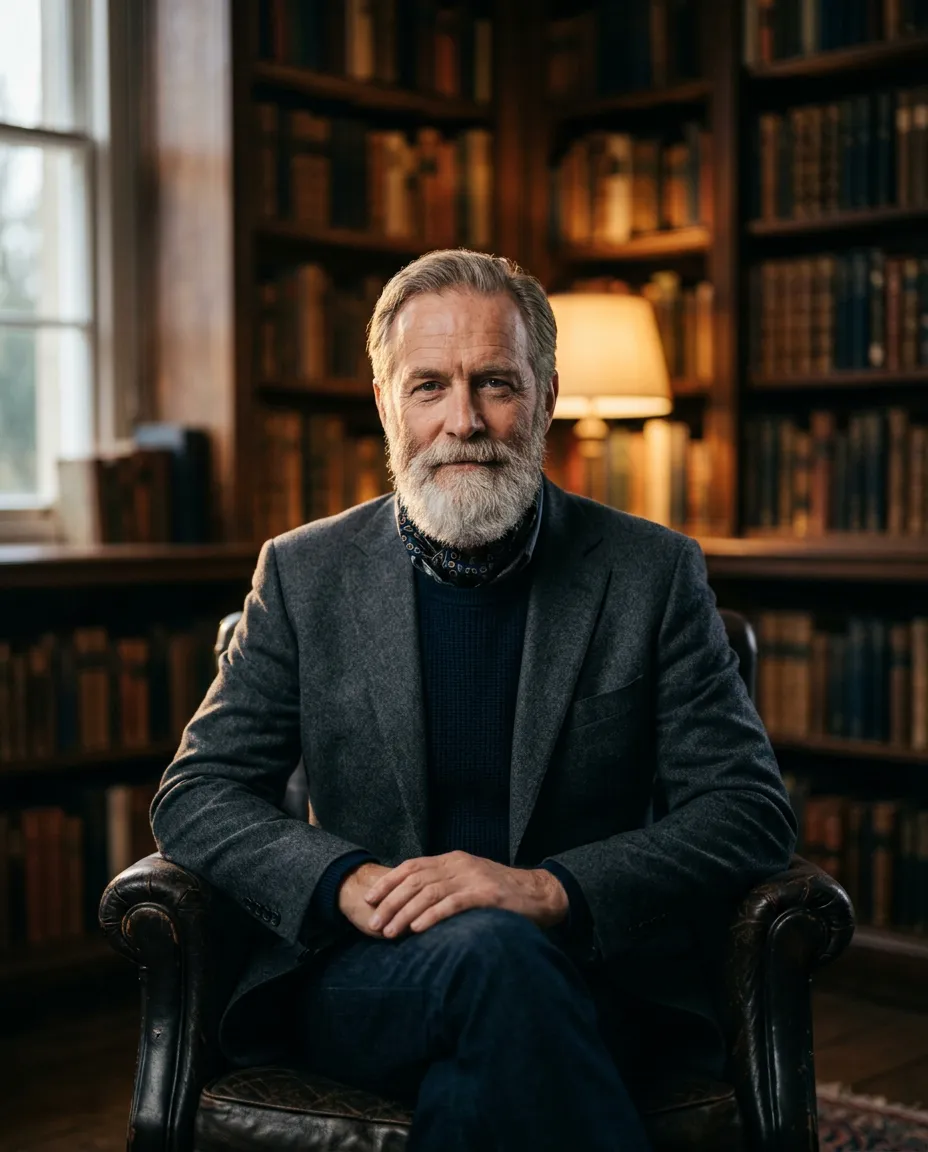
Before the ink ever touched the vellum of my first published manuscript, I spent twelve formative years wandering through the quietest corners of regional maritime archives and forgotten coastal hamlets. I was not searching for plots: I was searching for resonance. Growing up in an old timber-framed house where library volumes were revered like sacred heirlooms, I understood early on that written words carry physical weight. My grandmother kept an unlacquered cedar chest filled with handwritten nineteenth-century logs: meticulous daily journals kept by Atlantic cartographers who surveyed rocky inlets while wrestling with immense personal solitude. In those yellowed pages, the boundary between clinical navigation and human longing blurred entirely. That delicate intersection became the bedrock of my literary curiosity and shaped everything I would ever endeavor to write.
When I began drafting The Cartographer's Winter, the primary hurdle was never the historical veracity of maritime routes, but capturing the profound interior silence of individuals who lived by the needle of a compass and died in solitude. Every morning before the coastal dawn broke, in a drafty studio overlooking the granite shores of Penobscot Bay, I transcribed passages from century-old ship manifests onto heavy linen sheets. Writing by hand imposed an involuntary, meditative discipline: it slowed the pulse, demanded reverence for every syllable, and resisted the frantic velocity that digital screens encourage. In that unbroken morning stillness, the characters ceased being theatrical fabrications and assumed the solemn, undeniable weight of living memory.
Readers frequently inquire whether my narratives stem from direct autobiography or sheer invention. The reality is neither: every protagonist is an emotional composite, a mosaic assembled from fragments of observed sorrow, sudden kindnesses received on remote roads, and questions that remain unresolved after decades of quiet reflection. Great literature is never an escape from reality: it is the rare and merciful lens that brings the blurred contours of human experience into sudden, piercing focus. When a reader confesses that they revisited a solitary passage three times in the midnight quiet simply to feel less isolated in their personal grief, I know that the cold early hours at the desk fulfilled their singular purpose.
Today, my workspace remains intentionally sparse: two brass fountain pens, a bottle of dark iron-gall ink, and a stack of untrimmed ivory paper awaiting the morning sun. The world beyond this room may relentlessly demand brevity and instant spectacle, but between the margins of a bound volume, time still surrenders to cadence. We write to preserve what the decades threaten to erase, trusting that somewhere across oceans of time, an unseen reader will pause in the quiet lamplight and whisper: yes, this is exactly what it felt like.